

Comparing Hydraulic vs Electric Toilet Lift Chair Models for Nursing Homes
When selecting a toilet lift chair for a nursing home, one of the first decisions is power source. Should you choose hydraulic or electric? Each type of toilet lift chair has distinct advantages for different care settings. At Xiang Fa Li Technology, we manufacture both versions as part of our complete mobility equipment line. We also produce the transfer chair, patient transfer chair, and electric transfer chair. Understanding the trade-offs helps procurement managers make better decisions.
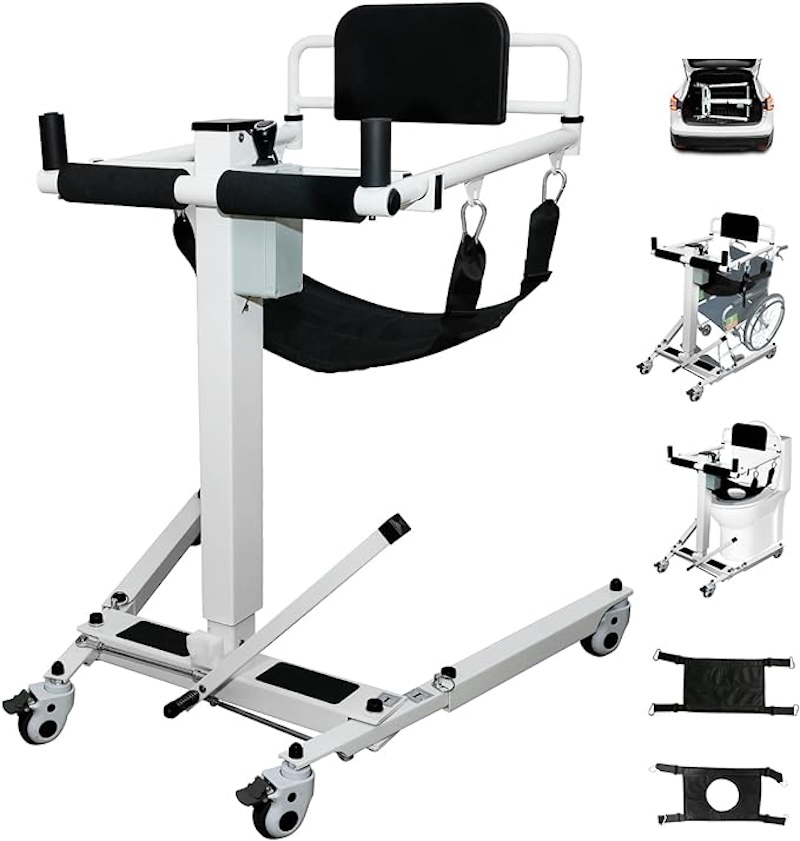
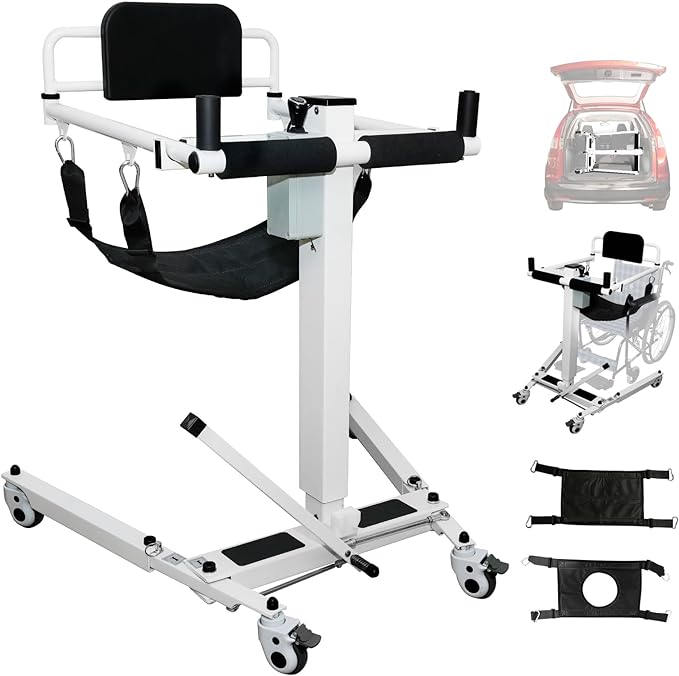
A hydraulic toilet lift chair uses a hand-lever pump to raise the seat. The caregiver pumps the lever several times to achieve lift height. Lowering is controlled by a release valve. This type of toilet lift chair requires no batteries or power outlets. It works anywhere, even in older buildings with limited electrical infrastructure. The hydraulic mechanism is simple and rarely fails. When maintenance is needed, it is straightforward and inexpensive. The same reliability philosophy applies to our manual transfer chair and basic patient transfer chair models. For facilities that prioritize simplicity and low maintenance, a hydraulic toilet lift chair is an excellent choice.
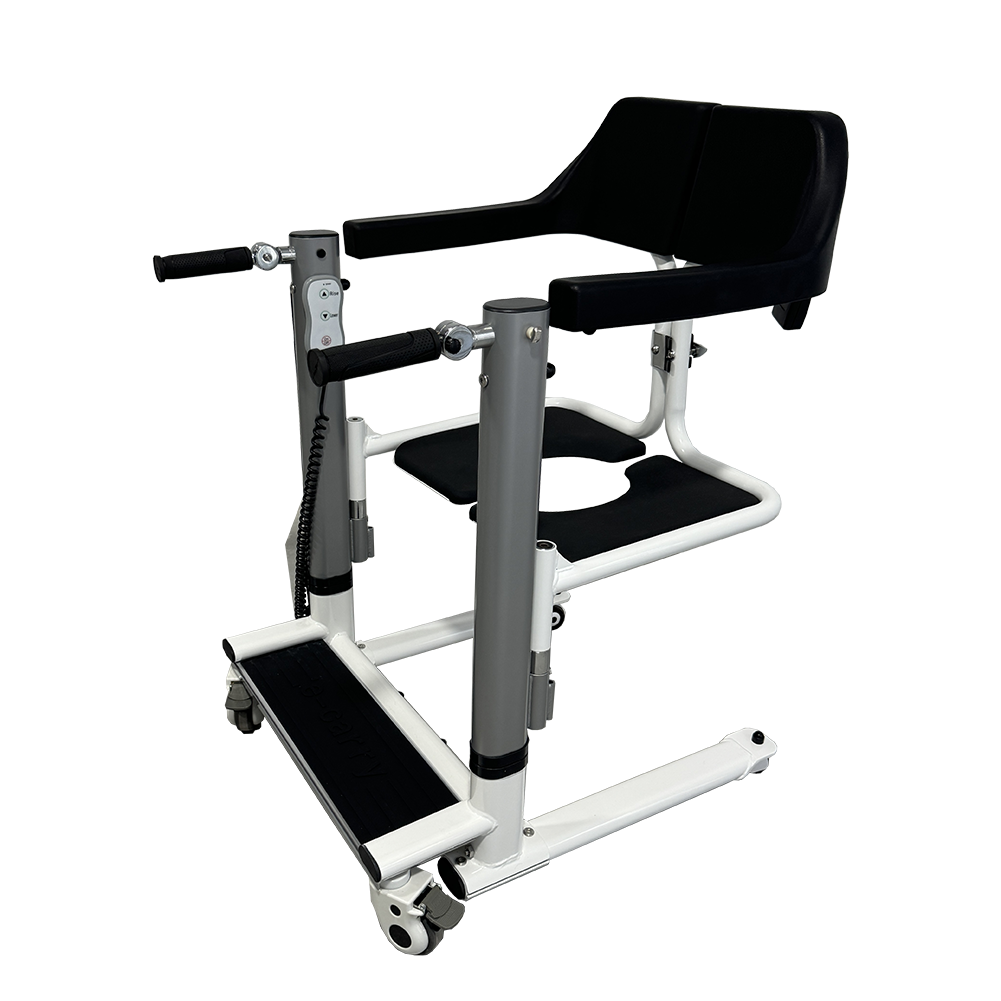
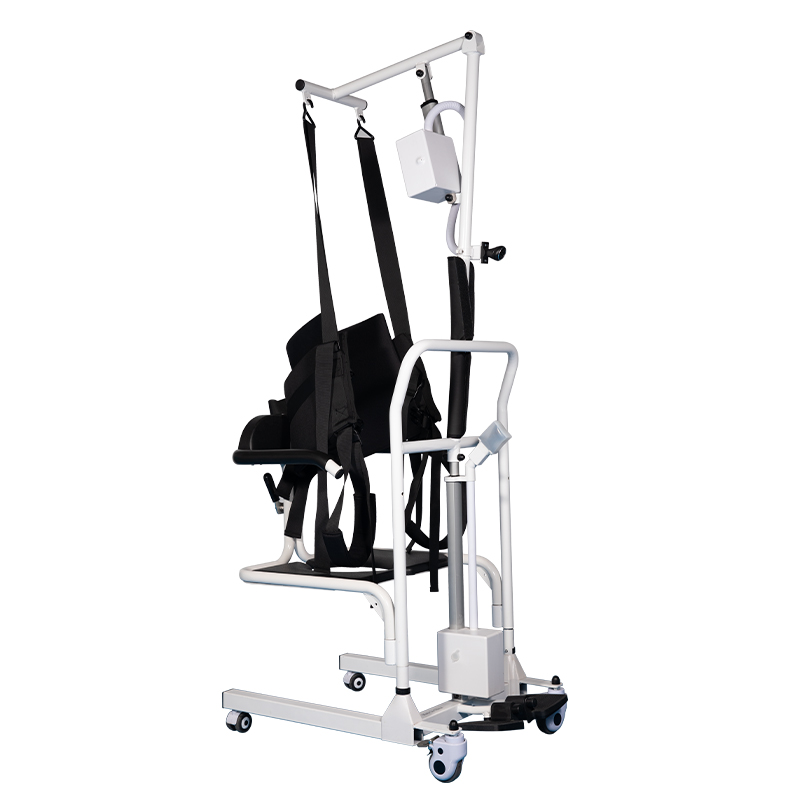
However, a hydraulic toilet lift chair does require physical effort from the caregiver. For patients who need multiple toilet transfers per day, that pumping action can become tiring. This is where an electric transfer chair or electric toilet lift chair offers advantages. An electric toilet lift chair uses a sealed actuator powered by a rechargeable battery. The caregiver simply presses a button to raise or lower the seat. No pumping required. This reduces physical strain, especially for older nursing staff or those with existing wrist or shoulder issues. The same powered convenience applies to our electric transfer chair, which is ideal for frequent transfers between beds and chairs. Our patient transfer chair remains manual for transport use, but many facilities pair it with electric toilet lift chair and electric transfer chair units for a balanced mobility equipment fleet.
The main consideration with an electric toilet lift chair is battery management. Staff must remember to charge the battery. Facilities should have spare batteries on hand to avoid downtime. The actuator is also more expensive to replace than a hydraulic pump, though failure rates are low. For nursing homes with reliable charging routines and higher patient transfer volumes, an electric toilet lift chair is often the better choice. The reduction in caregiver fatigue justifies the higher upfront cost and ongoing battery management.
Xiang Fa Li offers a dual-mode toilet lift chair that combines both systems. It operates electrically but includes a manual hydraulic backup. If the battery dies, the toilet lift chair still works. This is especially useful for facilities that want the convenience of an electric transfer chair-like operation but cannot risk downtime. The same backup principle applies to our transfer chair and patient transfer chair, which are purely manual and never depend on batteries.
For procurement managers building a mobility equipment fleet, we recommend a mixed approach. Purchase electric toilet lift chair and electric transfer chair units for high-use areas. Use hydraulic toilet lift chair models for low-use bathrooms or as backup units. Complete your fleet with durable transfer chair and patient transfer chair models for transport needs. Xiang Fa Li can help you calculate the right mix based on your patient population, staff profile, and budget.
Contact our mobility equipment team for a power-source comparison chart. It details lifting speed, effort level, maintenance frequency, and total cost for each toilet lift chair, transfer chair, patient transfer chair, and electric transfer chair option. We also provide sample units for on-site testing.
