

Understanding the Importance of Multi-Scenario Compatibility
For modern healthcare institutions, purchasing equipment that can perform well across multiple environments is no longer a luxury—it is a strategic requirement. Procurement managers today look for transfer chairs that can function seamlessly in bedside areas, bathrooms, rehabilitation rooms, hallways, and other daily care scenarios. Multi-scenario compatibility directly influences cost efficiency, reduces equipment redundancy, and ensures that caregivers can work more effectively with fewer tools.
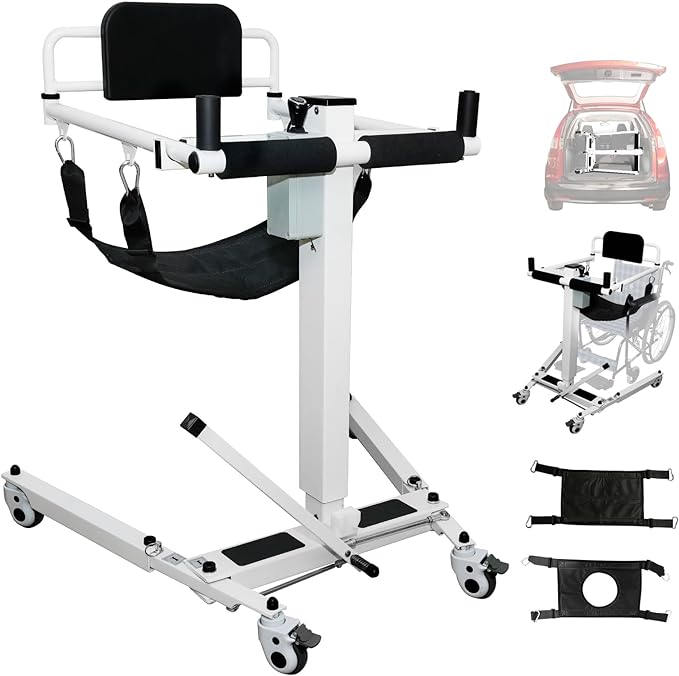
A high-quality patient transfer chair must support smooth transitions between various surfaces and height levels commonly found in healthcare settings. Beds, examination tables, wheelchairs, and therapy platforms often have different heights, which can create challenges during transfers. This is why Xiang Fa Li integrates adjustable height systems and flexible structural components into our patient transfer chair designs. Caregivers can raise or lower the chair to match the height of different furniture, minimizing lifting strain and ensuring safer transfers for patients. Detachable armrests, swing-away footrests, and removable seat sections further enhance compatibility with bedside environments where space is often limited.
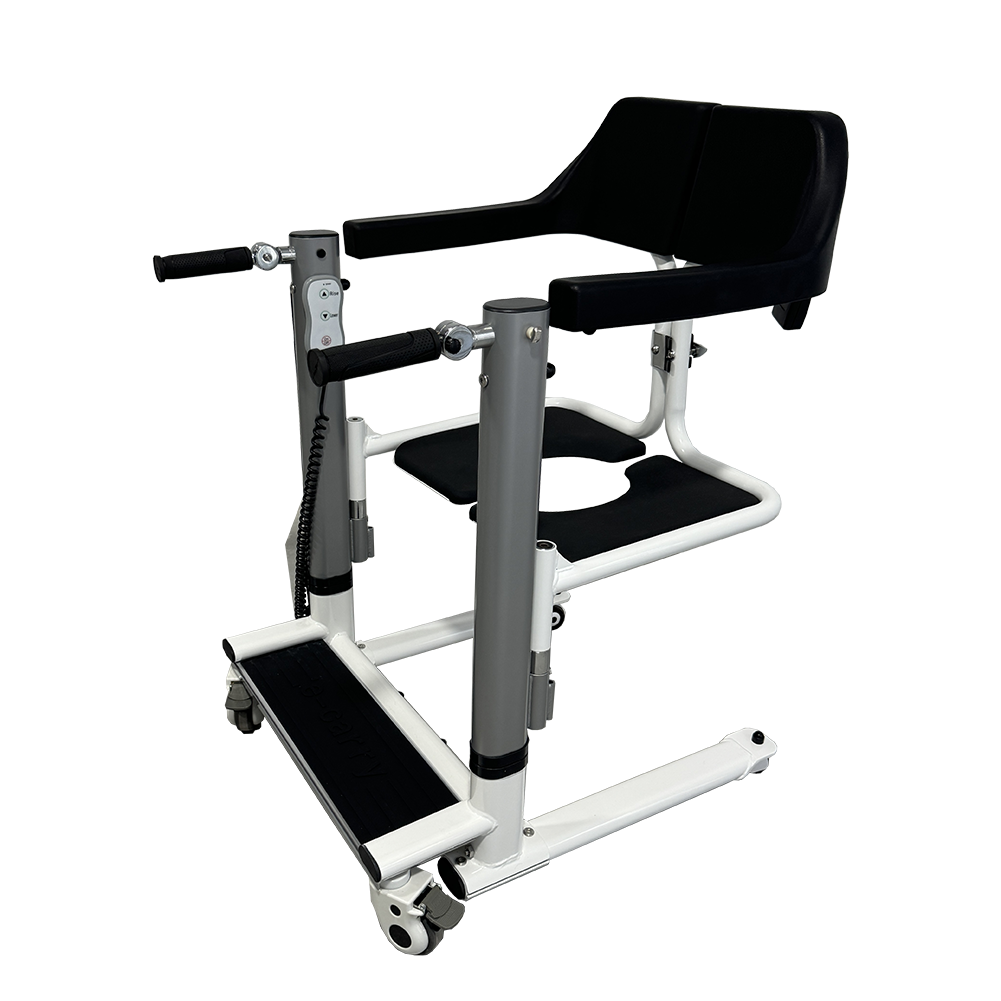
Bathroom environments introduce additional complexity. A shower transfer chair must navigate narrow doorways, tight turning angles, and wet surfaces—all while maintaining stability. Instead of requiring facilities to purchase a separate shower-only device, Xiang Fa Li engineers transfer chairs that can move directly from dry areas into wet zones. Waterproof bearings, rust-proof frames, drainage-friendly seats, and slip-resistant wheels ensure reliable performance in humid environments. This dual functionality allows caregivers to perform bathing, toileting, and cleaning tasks without switching equipment, significantly improving workflow efficiency.
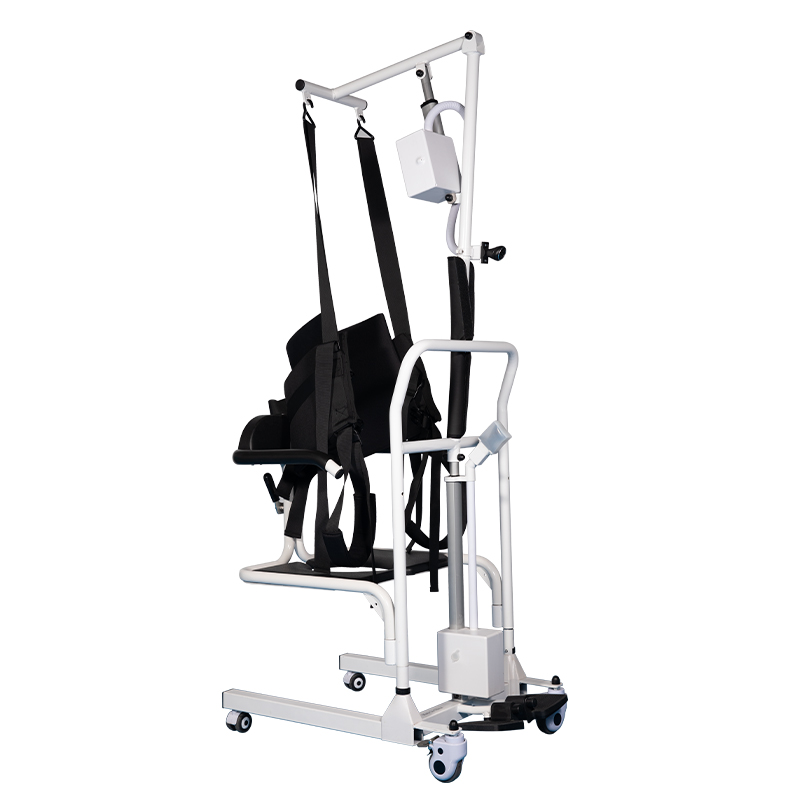
For more advanced requirements, an electric transfer chair offers even greater versatility. In many hospitals and eldercare facilities, patient heights vary, bed platforms are elevated, and toilets are designed for easy cleaning rather than ergonomic compatibility. This creates a major challenge for traditional non-powered chairs. Xiang Fa Li’s electric transfer chair models address this with high-range lifting actuators that can interface with both high-profile beds and low bathroom fixtures. Caregivers can adjust elevation smoothly with a control panel, enabling safe, controlled transfers regardless of environmental constraints.
Lift transfer chair systems must also handle more complex multi-angle transfers, such as moving patients diagonally from narrow spaces or positioning them precisely onto wheelchairs or therapy equipment. Our lift transfer chairs incorporate rotational frames, adjustable transfer angles, and reinforced support mechanisms to handle these challenging scenarios. This multi-angle flexibility is especially valuable in rehabilitation centers where patients require specific positioning during therapy sessions.
Multi-scenario compatibility does more than simplify logistics—it significantly increases equipment utilization. A transfer chair that can operate effectively in multiple spaces becomes a central tool used throughout the day, rather than a single-purpose device that sits idle when not needed. Procurement managers recognize that such versatility directly reduces overall purchasing and maintenance costs. Instead of buying separate solutions for bedside transfers, bathroom assistance, and hallway mobility, they can invest in one chair that performs multiple functions reliably.
Operational efficiency also improves when caregivers only need to understand and maintain a single system. This reduces training time and minimizes errors that can occur when staff must switch between different types of equipment. For patients, the continuity of using the same device for various daily tasks brings a sense of familiarity and comfort, reducing anxiety during transfers.
At Xiang Fa Li, our engineering philosophy prioritizes flexible structural design specifically to meet these multi-scenario demands. We carefully analyze real-world usage patterns, caregiver feedback, and facility layout constraints to develop transfer chairs that adapt to diverse environments without compromising safety or durability. By emphasizing compatibility, we help healthcare institutions optimize workflow, reduce procurement complexity, and improve the overall standard of patient care.
Multi-scenario compatibility is not just a feature—it is a long-term value that ensures broader use, lower operational cost, and smoother daily caregiving experiences.
